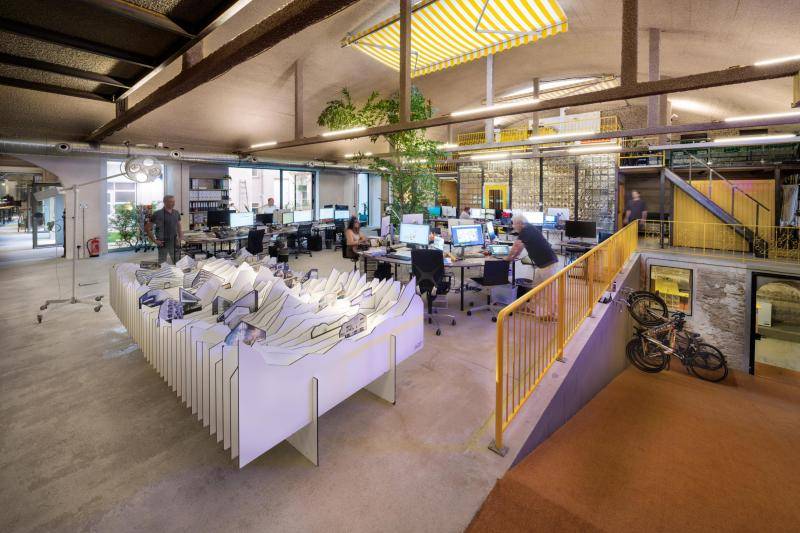
© DI Wilhelm Sedlak GmbH





© DI Wilhelm Sedlak GmbH
Other interesting projects from the category Circular economy & Renovation
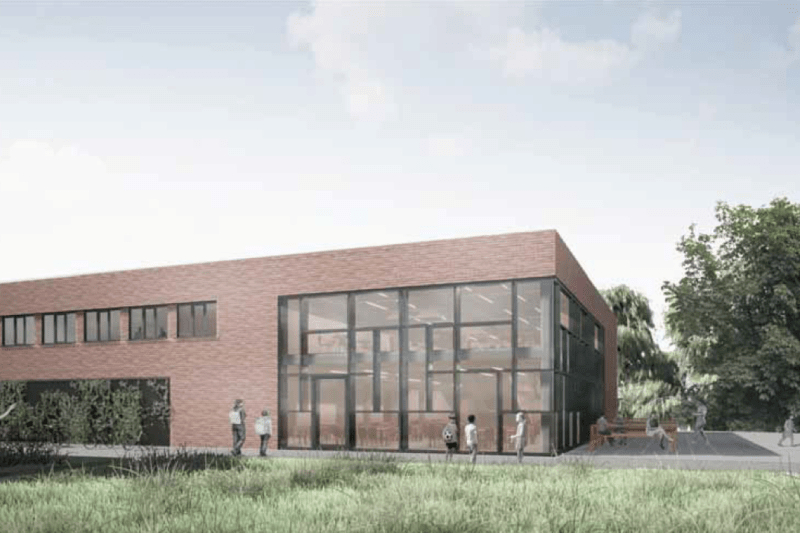
New cafeteria for the comprehensive school “An der Berkel” in the city of Vreden
In planning the project, the city of Vreden (North Rhine-Westphalia) placed great emphasis on circular construction. A life cycle analysis was carried...
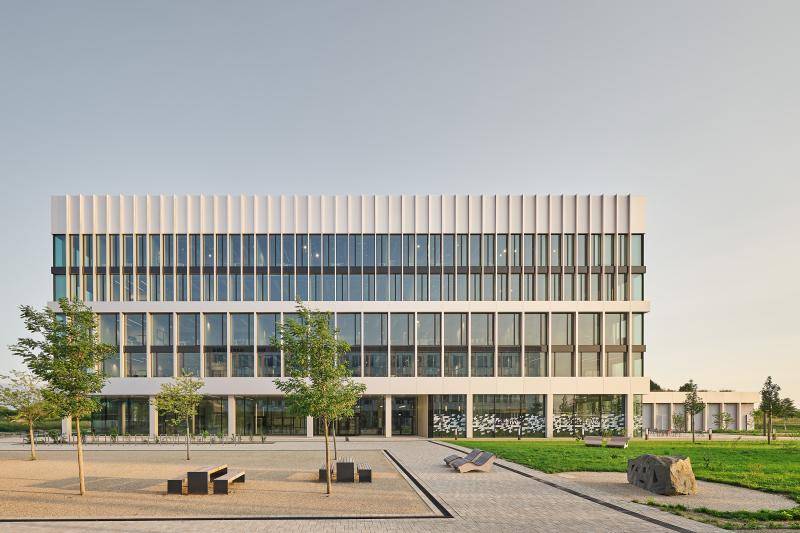
SAP Labs Munich Campus
The SAP Labs Munich Campus in Garching is a new building designed to accommodate work, research, and teaching. Jointly used by SAP and the Technical U...
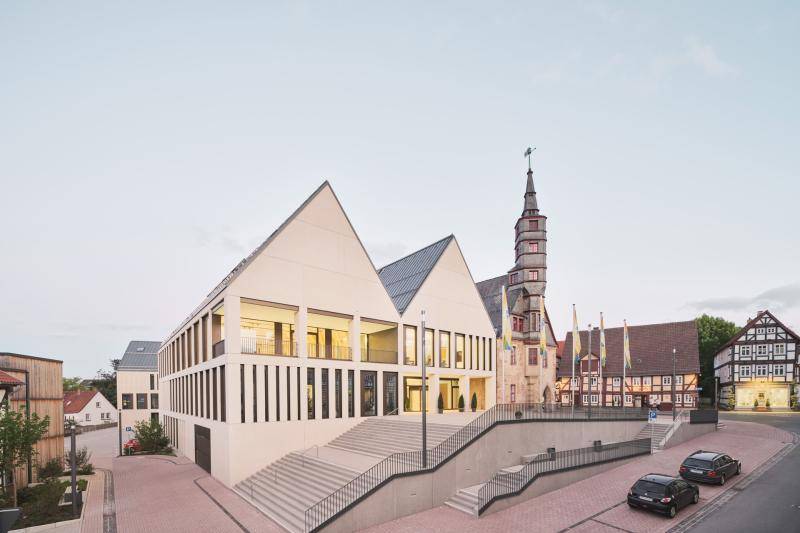
Korbach Town Hall
With the demolition and new construction of the town hall, the current approaches of urban mining and circular construction were trialled in a solid b...
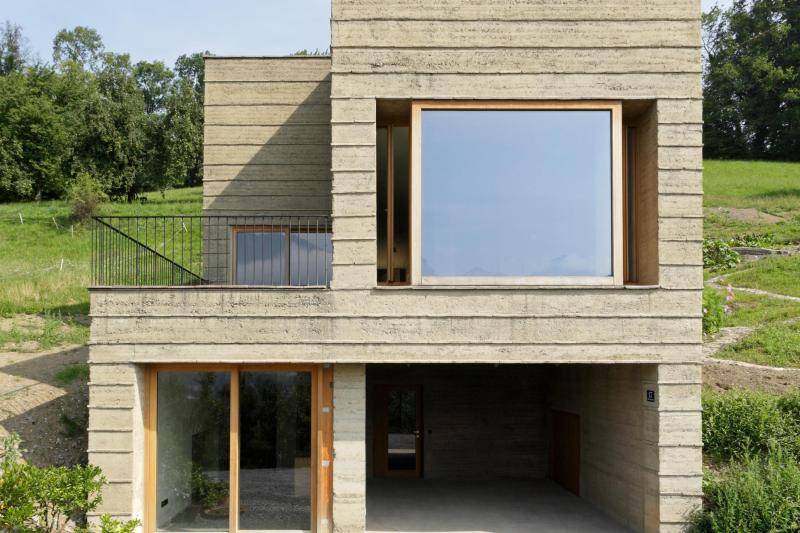
Clay house Rauch
The Rauch residence is a model of modern earthen building. It was designed and built by the earthen building pioneer Martin Rauch and the architect Ro...
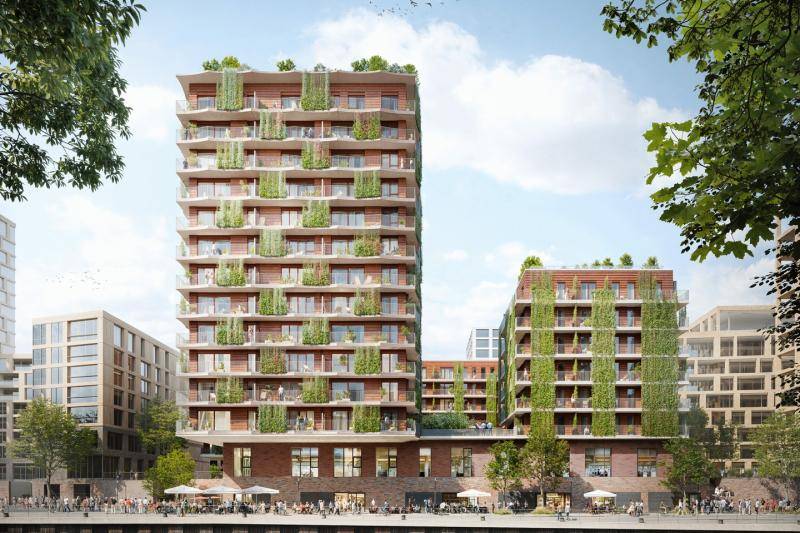
Moringa
In Hamburg's HafenCity, the Moringa residential district is being developed on the northern shore of the Baakenhafen. The complex comprises three buil...

LOOP Market Haimhausen
The LOOP Markt Haimhausen is a new EDEKA supermarket being developed according to the Cradle-to-Cradle principle. Following the laying of the foundati...
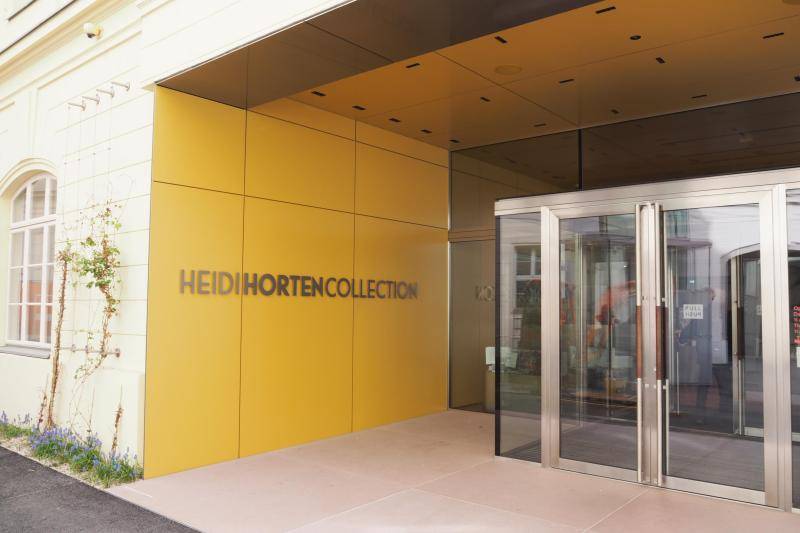
Heidi Horten Museum
The former chancellery building of Archduke Friedrich, built in 1914 in Hanuschhof, was completely gutted to create 1500 square meters of space for He...

Maria Ward Schools Nuremberg
The completed new building in downtown Nuremberg brings together a grammar school (Gymnasium), a secondary school (Realschule), and a primary school u...
Heidi Horten Museum
The former chancellery building of Archduke Friedrich, built in 1914 in Hanuschhof, was completely gutted to create 1500 square meters of space for He...
