ReConstruct4CE: Circular Economy in Construction That Pays Off in Practice

What’s it all about?

The construction industry is one of the most resource- and energy-intensive sectors in Europe. At the same time, pressure is mounting: Public contracting authorities are increasingly prioritizing circular and low-carbon construction, and requirements are becoming stricter.

Simply put, the circular economy in construction means keeping materials and components in use for as long as possible. They are reused, refurbished, repaired, or recycled into high-quality products instead of being disposed of. This applies to new construction, renovation, and demolition.

There are already many good tools, databases, and training programs available, but they are scattered, often available only for specific regions, and difficult for companies to navigate. ReConstruct brings together the results of seven previous European projects and makes them easily accessible to small and medium-sized construction companies. Partners from Austria, Italy, Poland, Slovenia, and Slovakia are involved.

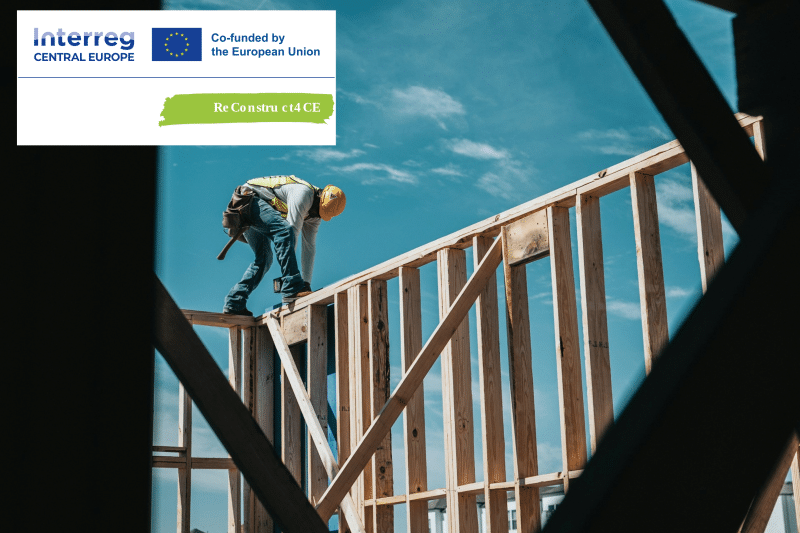
Foto von Josh Olalde auf Unsplash

How does this benefit your business?

New business opportunities: There is growing demand for dismantling, reuse, refurbishment, and remediation. Those who can offer these services have a competitive edge.

Confidence in bidding: You’ll learn what matters in circular economy and “green” tenders and can tailor your bid accordingly.

Cost savings: Reusable and recyclable materials reduce procurement and disposal costs.

Faster access to the right solution: Instead of spending time on extensive research, you’ll find products, processes, and suppliers all in one place.

Learning from real-world experience: You’ll see how other companies have implemented circular economy projects, including the opportunities, challenges, and solutions.

Networking and visibility: You’ll meet experts from Austria and Europe and can position your company as an innovative business.

What will the project produce?

1. Digital Knowledge Repository (“Hub of Hubs”)

A shared online platform that brings together existing tools: databases for secondary materials, CO₂ calculators, checklists for sustainable procurement, and real-world examples. Short explanatory videos demonstrate how the platform works.

2. Expanded Innovation Map for the Circular Economy

A directory of completed projects and solutions, supplemented with new examples from Austria and Central Europe. You can see at a glance what’s already working and who’s behind it.

3. Catalog of Circular Material Solutions

An overview featuring key properties, environmental data, and real-world examples. The solutions will be presented in webinars and discussed with experts.

4. Training and Knowledge Exchange

Practical training on sustainable procurement, digital construction, and low-carbon renovation, featuring workshops, site visits, and peer-to-peer knowledge exchange between companies. In Industry Labs, companies collaborate with researchers and government agencies to test the tools on real-world projects.

5. Practical Examples in Short Videos

Participants from completed projects provide concise reports on what they did and what they learned in the process.

6. Joint Strategy for Circular Construction

A European strategy paper that consolidates experiences and provides impetus for policy and funding programs.


A Real-World Example

A company is planning to renovate a building. Instead of disposing of building components, the platform and the innovation map show which materials can be remanufactured or reused—and who can provide support in this process. So-called “Circular Renovation Sheets” provide a concise summary of the key points. The result: less waste, lower costs, and a showcase project for the company.

Funding and Projectpartners

ReConstruct is being implemented with support from the European Union as part of the Interreg Central Europe program.

Partners: Slovenian National Institute of Construction and Engineering (ZAG, project lead), Eurac Research (Italy), Krakow Technology Park (Poland), IT Cluster of the Polish Construction Industry, Slovak Innovation and Energy Agency (SIEA), and the Zukunftsagentur Bau (Austria).

Project Overview

  • Duration: 24 months
  • Countries: Austria, Italy, Poland, Slovenia, Slovakia
  • Target group: Construction companies (SMEs), planners, building owners, public contracting authorities
  • Benefits: Practical knowledge, continuing education, digital tools, networking